




Frequently Asked Questions
Eurasian watermilfoil (Myriophyllum spicatum) is an invasive aquatic plant that was introduced to the U.S. from Europe and Asia. It grows rapidly in Washington lakes and forms dense mats just below the water’s surface. These mats block sunlight from native plants, degrade water quality, tangle boat propellers, and make swimming dangerous. It spreads easily — even a small fragment left on a boat trailer can establish a new infestation in another lake.
In King County, property owners are actually required to control Eurasian milfoil on their land. Left untreated, it can lower property values and make waterfront areas unusable during summer months.
The cost of lake weed removal depends on several factors: the size of the area, the type and density of weeds, water depth, and how accessible your shoreline is. Most residential jobs for a typical dock and swimming area are significantly more affordable than chemical treatments or large-scale commercial harvesting.
We provide free, no-obligation quotes for every job. Call us at (206) 395-8339 or request a quote online and we’ll give you a clear price after assessing your property.
It depends on the method. In Washington State, physical and mechanical removal of aquatic noxious weeds (like hand-pulling or using a harvester) is covered under the Department of Fish & Wildlife’s “Aquatic Plants and Fish” pamphlet, which serves as your permit for most residential-scale projects. Chemical treatments require separate permits from the Department of Ecology.
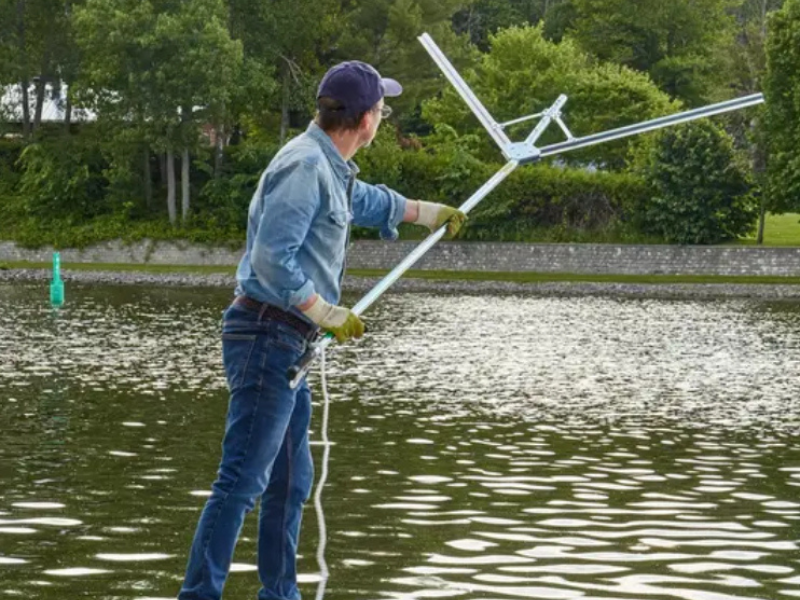
Milfoil Mercenaries handles all of this for you. We use eco-friendly mechanical methods — our WaterShark harvester, hand rakes, and weed razors — so there’s no chemical permitting involved. For larger commercial jobs that may require additional WDFW or Department of Ecology coordination, we manage the process on your behalf.
Most residential waterfront cleanings — clearing the area around a dock and swimming zone — take one day. Our WaterShark harvester can clear over 10,000 square feet of lake weeds in 3–4 hours. Larger properties, commercial sites, or heavily infested areas may take 2–3 days.
After the initial clearing, many homeowners opt for a seasonal maintenance plan to keep their waterfront clean throughout the summer when milfoil grows fastest.
Yes. Milfoil and other invasive lake weeds grow back throughout the season, especially during warm summer months. A one-time deep cleaning is a great start, but many of our customers in the Seattle area and across Washington sign up for seasonal maintenance to keep their waterfront consistently clear from spring through fall.
We’ll work with you to set up a schedule that fits your lake’s growth patterns and your budget. Contact us to learn more about our maintenance options.
Milfoil Mercenaries serves all of Washington State. Our primary service areas include King County (Seattle, Bellevue, Kirkland, Mercer Island, Redmond, Issaquah), Snohomish County, Pierce County (Tacoma, Lakewood), and Chelan and Douglas counties (Wenatchee, Chelan, Entiat). We work on lakes of all sizes, including Lake Washington, Lake Sammamish, Lake Chelan, American Lake, and many smaller community lakes and private ponds.
View our full Service Area page for a complete list of cities, counties, and lakes we cover. Don’t see your area? Call us at (206) 395-8339 — we’re always expanding.
Absolutely. We use 100% mechanical and manual methods — no chemicals or herbicides, ever. Our battery-powered WaterShark harvester cuts and collects weeds without disturbing the lakebed, and our crew follows up with hand rakes and weed razors for precision work. All removed vegetation is hauled off-site for composting.
This approach is significantly gentler on fish, native plants, and the surrounding ecosystem compared to chemical treatments. We also follow Washington Department of Fish & Wildlife timing guidelines to avoid disturbing spawning and migration periods.